Cellular biology
In this Chapter
Goal:
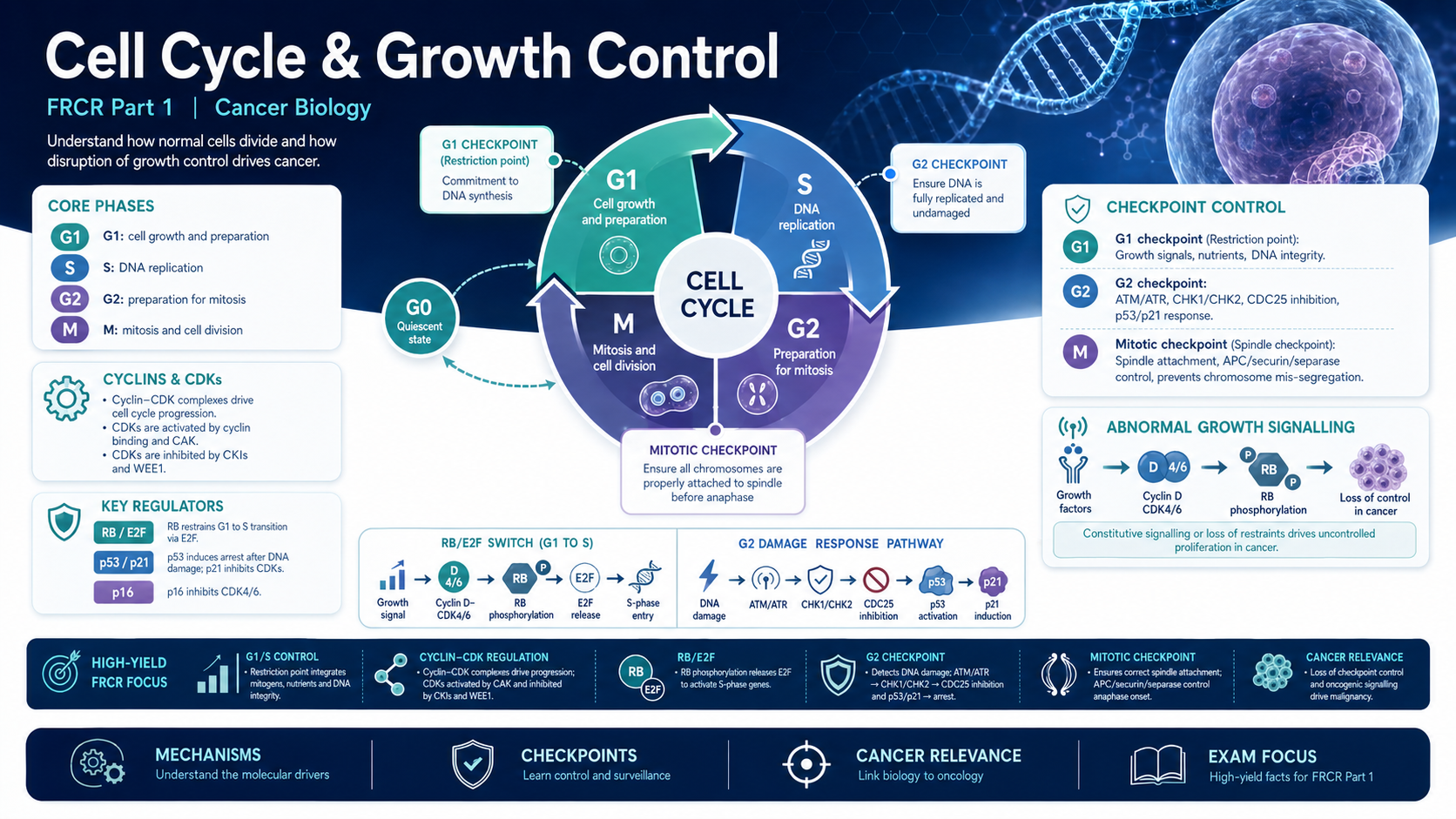
Understand how normal cells divide, how checkpoints control safe progression, and how loss of growth control leads to cancer.
Cover:
G1, S, G2 and M phases, cyclins and CDKs, CDK activation and inhibition, CAK, WEE1, CDC25, p16, p21, RB/E2F, G1 restriction point, p53/p21 DNA damage response, G2 checkpoint, mitotic spindle checkpoint, APC, securin, separase, aneuploidy, abnormal growth signalling and therapeutic targets including CDK4/6 inhibitors and microtubule drugs.
Syllabus match:
This directly maps to the FRCR syllabus requirement to describe the cell cycle, basic cell kinetics and control mechanisms, and to understand normal and abnormal mechanisms of cell growth control. The syllabus also includes molecular targets for anti-cancer therapy, which links this section to CDK4/6 inhibitors and mitotic spindle-targeting drugs.
Output:
This should be the first deep dive because cell cycle is a central cancer biology topic and links strongly to tumour suppressor genes, DNA damage response, radiobiology and systemic therapy. The key exam focus is how cells move through checkpoints and what happens when RB, p53, p16, cyclins or CDKs are disrupted.